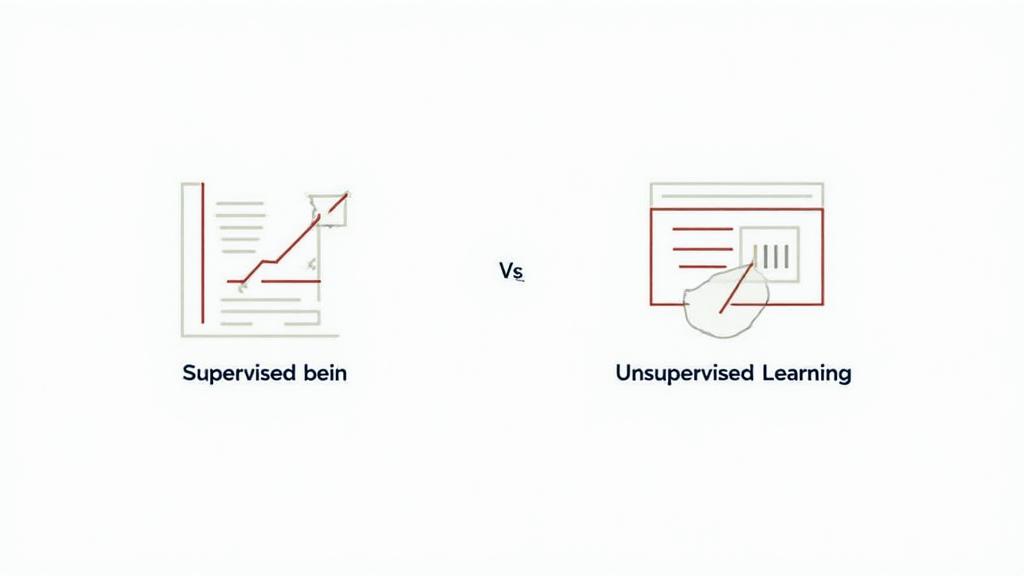
Supervised vs. Unsupervised Learning in Forex Trading
According to Chainalysis data from 2025, approximately 73% of traditional Forex trading algorithms may falter without incorporating advanced learning models. As traders and firms grapple with the evolving financial landscape, it’s crucial to understand the distinctions between Supervised and Unsupervised Learning and their implications on Forex trading strategies.
What are Supervised Learning Frameworks?
Supervised Learning can be likened to a teacher guiding a student through a syllabus. In Forex, this means training algorithms using historical price data to make predictions about future movements. For instance, if a model learns from data showing that the et=”_blank” href=”https://theguter.com/?p=6760″>et=”_blank” href=”https://theguter.com/?p=6804″>et=”_blank” href=”https://theguter.com/?p=7600″>et=”_blank” href=”https://theguter.com/?p=7642″>et=”_blank” href=”https://theguter.com/?p=9026″>Euro rises against the Dollar when certain economic indicators are released, it becomes better at predicting future price movements based on et=”_blank” href=”https://youccet.com/?p=1803″>et=”_blank” href=”https://youccet.com/?p=1803″>real-world events. This method boasts a higher accuracy rate, as it ‘knows’ what outputs to expect based on labeled input data.
The Role of Unsupervised Learning in Identifying Trends
Conversely, Unsupervised Learning is akin to a child exploring a candy store without supervision, discovering new flavors along the way. In trading, algorithms analyze unlabelled data to identify hidden patterns and correlations that traditional models might miss. For example, by clustering currencies based on their price movements, traders can unearth potential correlations, or ‘candy combinations,’ that could indicate untapped investment opportunities.
Challenges of Implementing Learning Models in Forex
One significant challenge is the volatility of currency prices. The ever-changing Forex market behaves unpredictably—much like a roller coaster ride in a theme park. Traders using Supervised Learning might find their algorithms faltering if economic conditions shift abruptly, while those employing Unsupervised Learning must be cautious about data overload or identifying patterns that don’t translate into actionable insights.
Hybrid Models: The Future of Forex Trading Algorithms
Combining both Supervised and Unsupervised methods can yield promising results, similar to mixing ingredients in a recipe to create a unique dish. A hybrid approach harnesses the strengths of both models, enabling traders to make data-driven decisions while also exploring new, uncharted territories in the Forex market. As firms look for competitive edges, this melding of methodologies is set to gain traction.
In summary, understanding Supervised vs. Unsupervised Learning is more than an academic exercise—it is essential for navigating the complexities of the Forex market. For in-depth resources, including our free tool kit on hybrid learning models in Forex, ef=”https://hibt.com/toolkit”>click here.